Vibration Therapy

Vibration Therapy
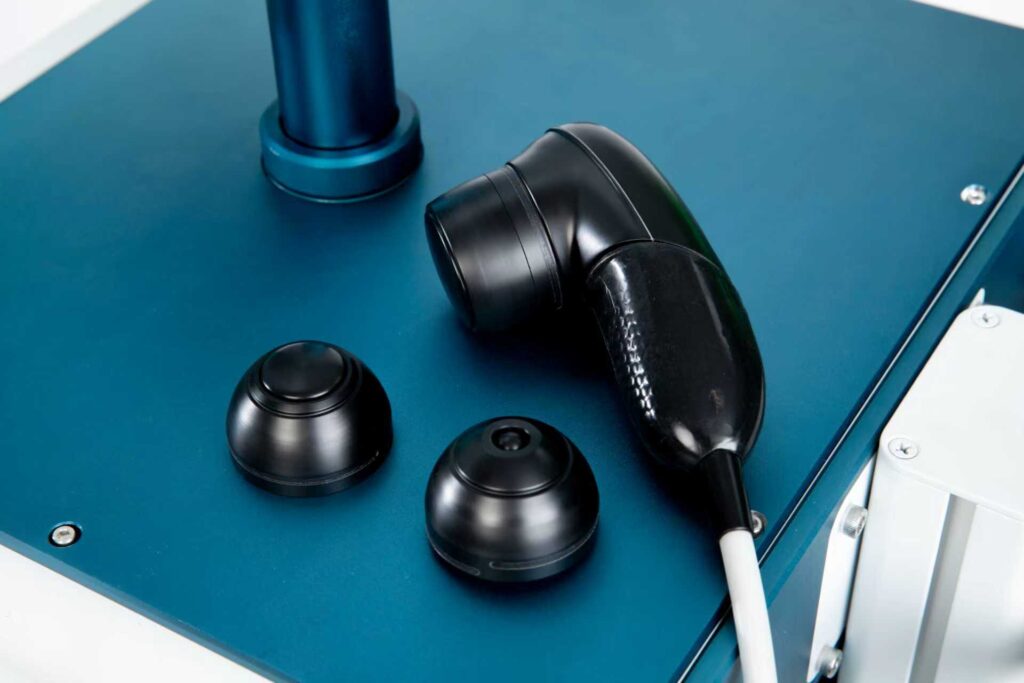
Vibration therapy is a non-invasive mechanical treatment that delivers high-frequency oscillatory movements to the body through a handheld or platform-based device. It shares similarities with radial shockwave therapy in its application of mechanical energy to stimulate tissue response, but utilizes rapid, repetitive vibrations rather than acoustic pulses. This therapy is designed to improve muscle function, enhance circulation, reduce pain, and support recovery in both rehabilitation and fitness settings.
How It Works
Vibration devices generate rapid oscillations (typically ranging from 10–200 Hz) that are transmitted through soft tissues and bones. These mechanical vibrations elicit multiple physiological responses:
Neuromuscular Activation: Stimulates muscle spindles, leading to reflexive muscle contractions and improved strength.
Blood Flow Enhancement: Increases vasodilation and oxygen delivery to tissues.
Lymphatic Drainage: Promotes reduction of edema and metabolic waste clearance.
Pain Modulation: Triggers gate control mechanisms and reduces hypertonicity in muscles.
Key Benefits
Non-Invasive and Pain-Free: Suitable for sensitive or acute injury conditions.
Adaptable Intensity: Frequency and amplitude can be adjusted to target different tissues and goals.
Whole-Body or Localized Application: Available as handheld units for focused treatment or platforms for systemic effects.
Clinical Applications
Muscle spasms and chronic tension
Sports recovery and performance enhancement
Osteoporosis and sarcopenia prevention
Balance and coordination training
Pre- and post-exercise warm-up and recovery
Treatment Protocol
Frequency: 20–50 Hz for relaxation; up to 200 Hz for neuromuscular activation
Session Duration: 5–15 minutes per area
Treatment Schedule: 3–5 sessions per week, based on condition and goals